Hoof Cracks in Horses: Causes, Treatment, and Prevention
When the forces placed on one part of the hoof become greater than the wall can manage, a crack may develop.
This guide is intended for general education and does not replace veterinary diagnosis or treatment. If you suspect your horse has a deep, painful, or infected hoof crack, contact your veterinarian.
Last reviewed:
A hoof crack rarely appears without raising questions. Is it just a small chip? Will it grow out on its own? Does my horse need treatment? Most importantly, what is the hoof trying to tell me?
Some cracks are more serious than others, but every crack deserves a closer look. A crack is not always the problem itself. Often, it signals that something has placed more stress on the hoof wall than it can comfortably manage.
That does not mean every crack is an emergency. Many superficial cracks are cosmetic and never cause lameness. Still, understanding why a crack developed gives us the best chance of keeping it from becoming deeper, unstable, painful, or infected.
Why Do Hoof Cracks Develop?
The hoof is remarkably strong, but it is never static. With every stride, it accepts the horse’s weight, meets the ground, expands, and moves. When the forces placed on one part of the hoof become greater than the wall can manage, a crack may develop.
Sometimes the reason is easy to see. There may have been an injury to the coronary band, an abscess that drained through the hoof wall, or a long period between trims. More often, several smaller factors have worked together over time.
Contributing factors may include:
Long toes or hoof flares
Uneven hoof balance or loading
Infrequent or inappropriate trimming
Hoof or coronary-band trauma
Previous abscesses
Poor-quality hoof horn
An unbalanced diet or nutritional deficiencies
Repeated changes between wet and dry conditions
Conformational stresses, including sheared heels
Veterinary sources, including the MSD Veterinary Manual, identify excessive forces, hoof imbalance, coronary-band trauma, poor hoof-wall quality, and inadequate trimming as important contributors.
Rarely is there one answer that fits every horse. This is why trimming away the visible crack or covering it with a dressing may not provide a lasting solution. We need to understand what created the stress in the first place.
Not All Hoof Cracks Are the Same
The location, depth, and direction of a crack can tell us a great deal about what may be happening.
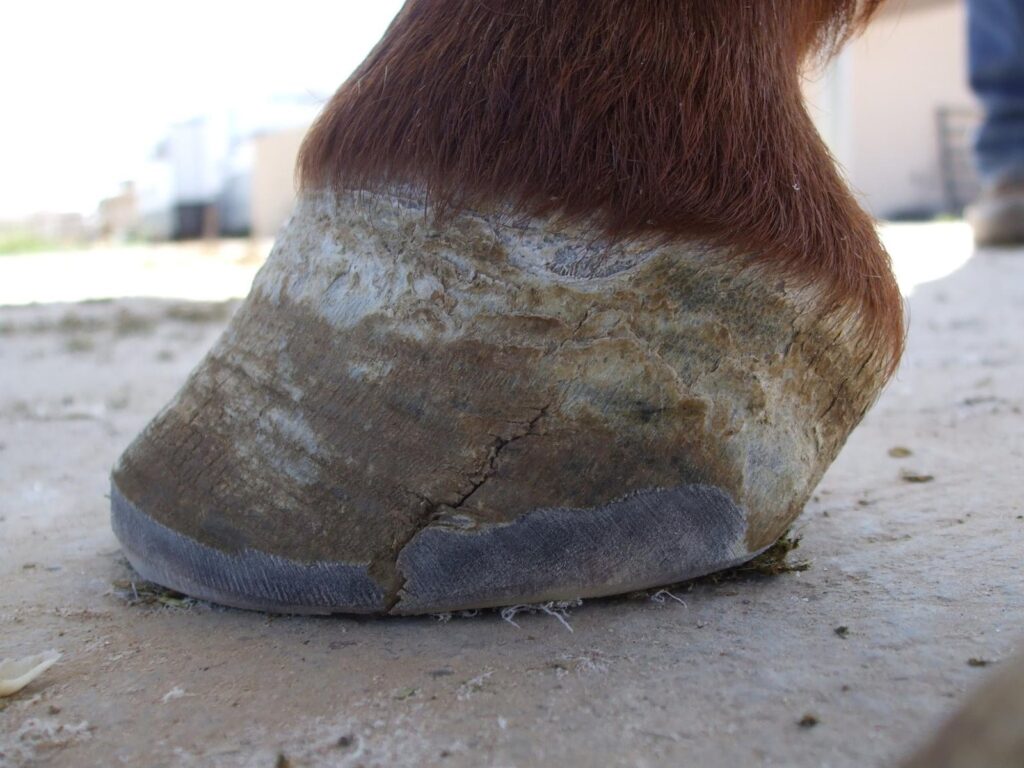
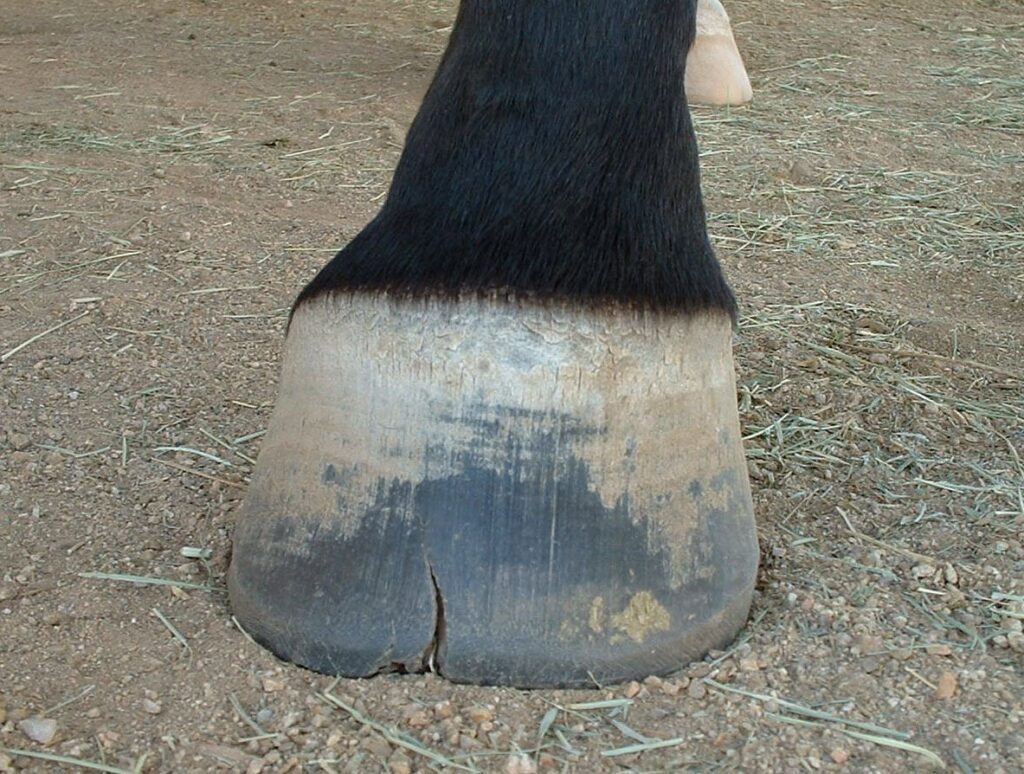
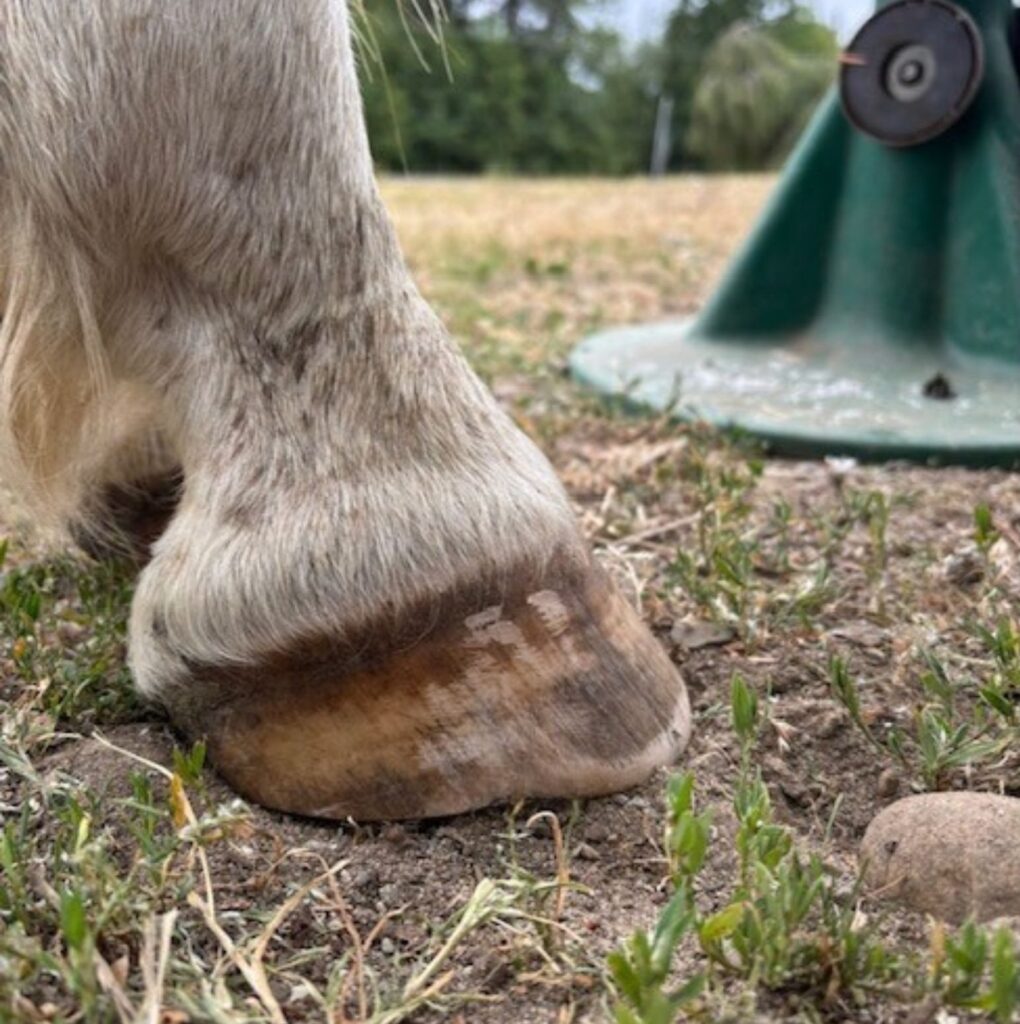
Toe cracks appear at the front of the hoof. They may be associated with long toes, flares, trauma, hoof imbalance, or the forces created during breakover. Because the toe bears considerable leverage as it leaves the ground, the underlying balance of the hoof should be carefully assessed.
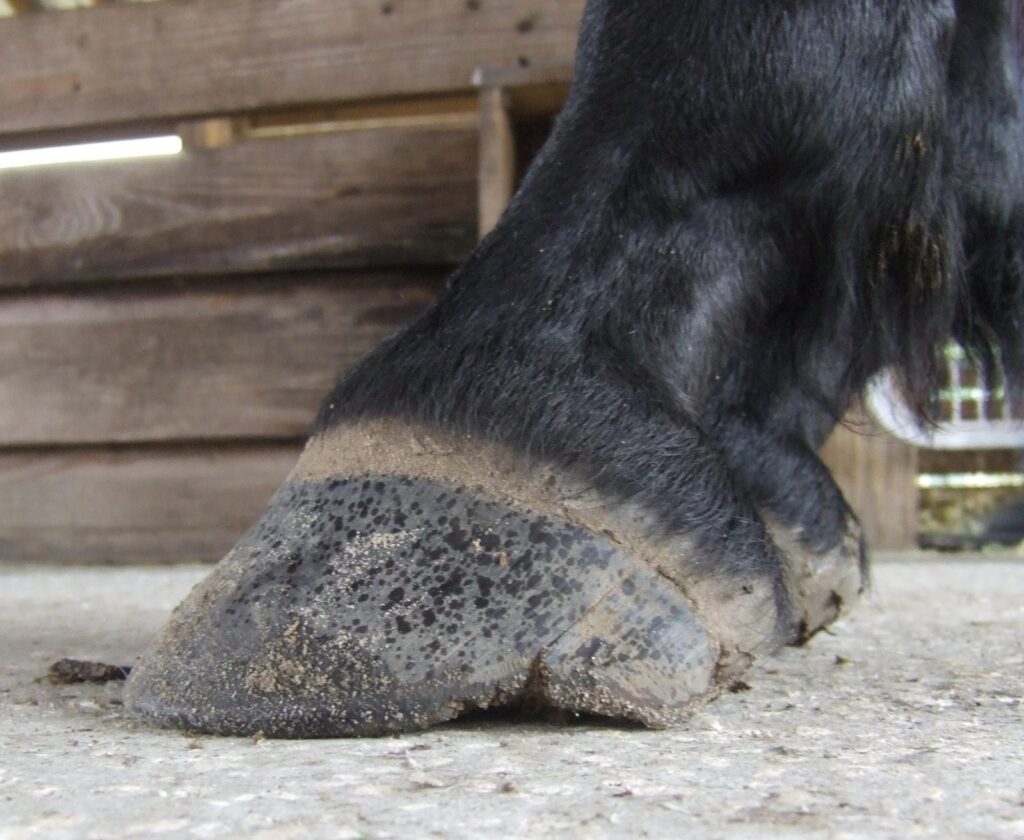
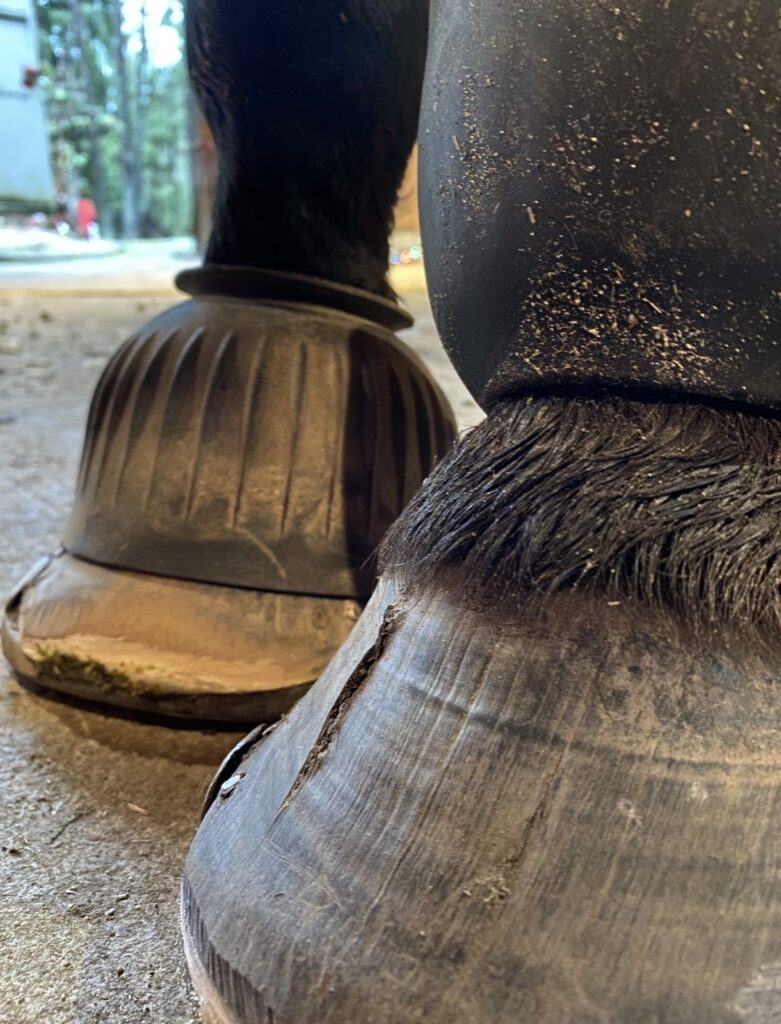
Quarter cracks occur along the sides of the hoof between the toe and heel. These cracks deserve close attention because the quarters flex and bear changing forces with every step. Deep or unstable quarter cracks can involve sensitive tissue, become infected, and cause lameness.
Heel cracks develop toward the back of the hoof. Uneven heel loading, sheared or under-run heels, trauma, and poor hoof quality may all contribute. Cracks in this area can be uncomfortable because the back of the hoof is meant to expand and adapt as the horse moves.
Grass cracks begin at the ground surface and travel upward. They are often thin and superficial and may occur when the hoof becomes overgrown or is exposed to changing environmental conditions. Many remain cosmetic, but watch for signs of deepening or instability.
Sand cracks begin near the coronary band and grow downward with the hoof wall. Because they originate at the top of the hoof, they may reflect damage to the horn-producing tissues or continuing mechanical stress. Coronary-band involvement makes professional assessment especially important.
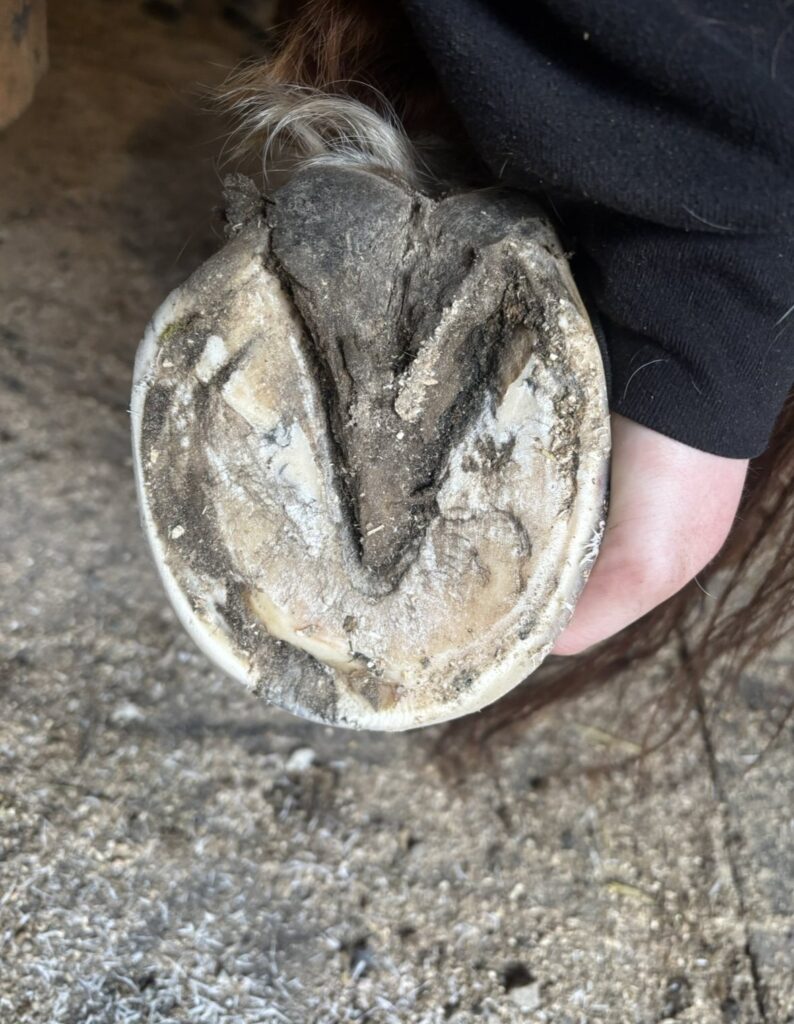
Bar cracks occur in the bars beside the frog. They may be associated with trauma or abnormal pressure and can be painful. They are easy to miss unless the sole is cleaned and examined carefully.
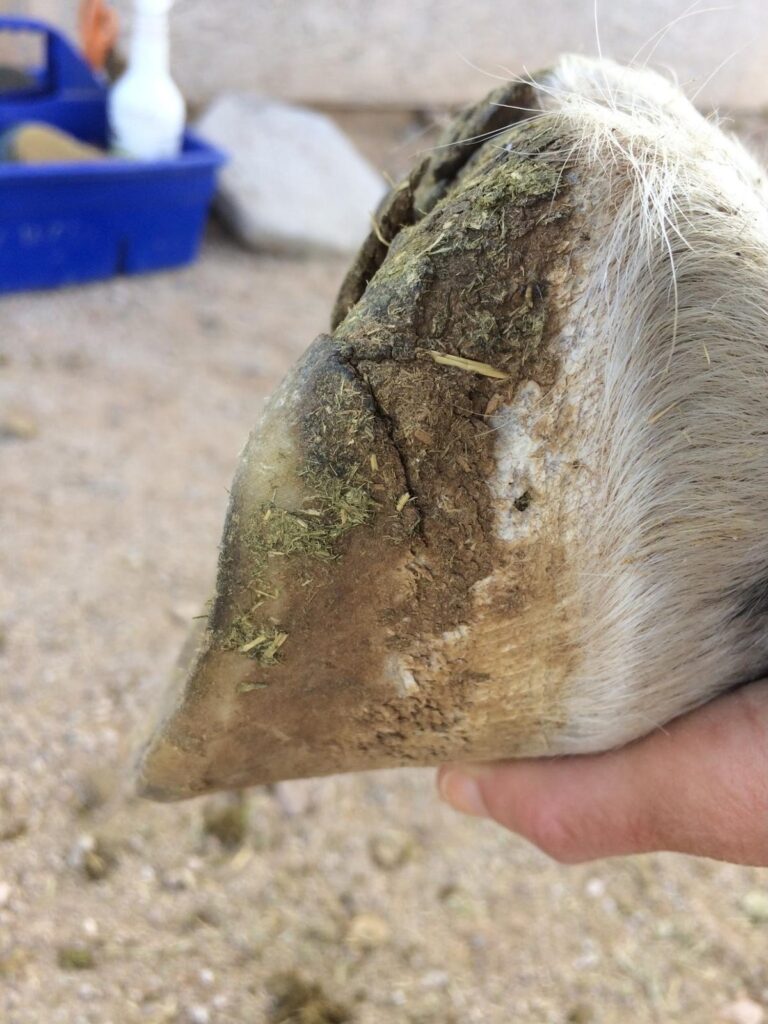
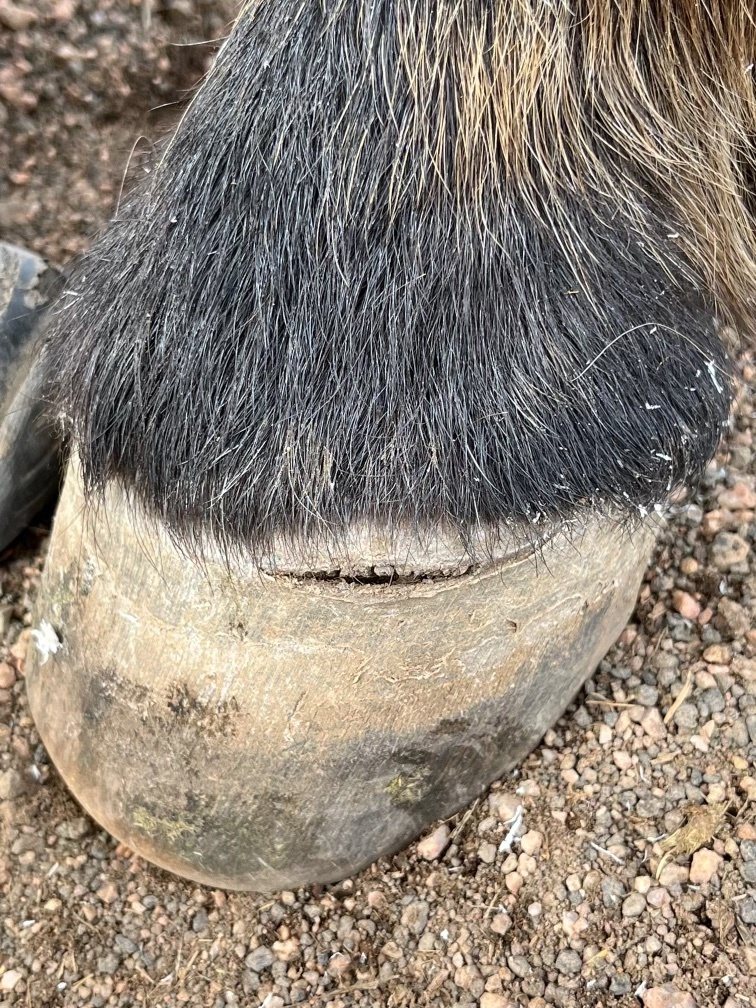
Horizontal cracks and old abscess tracks have a different story from most vertical cracks. They commonly follow an abscess that ruptured at the coronary band or an earlier injury to the horn-producing tissue. By the time the defect becomes visible farther down the wall, the original event may have happened months before.
If healthy horn is growing normally above the damaged area, the defect will usually travel toward the ground as the hoof grows. However, a horizontal crack extending around much of the hoof warrants veterinary investigation because systemic or nutritional disease may occasionally be involved.
Can a Hoof Crack Heal?
The answer is both yes and no.
A crack does not close and mend in the same way that a cut in the skin does. Instead, healthy hoof wall must grow down from the coronary band and gradually replace the damaged section.
This takes time. Depending on where the crack begins and how quickly that particular horse’s feet grow, replacement may take four to twelve months. A complete hoof wall commonly requires close to a year to grow from the coronary band to the ground.
Owning horses has always taught us patience. The goal is not simply to make the visible crack disappear. It is to remove or reduce the forces that caused it while giving the horse the best possible conditions for a stronger hoof to grow.
Regular, balanced trimming is central to that process. A balanced diet, a clean environment, and comfortable daily movement also support healthy hoof function. Depending on the crack, a veterinarian and hoof care professional may recommend relieving stress around the affected area, stabilizing the wall, treating damaged or infected tissue, or protecting the hoof while it grows out.
Caring for a Horse with a Hoof Crack
A cracked hoof benefits from steady observation and thoughtful care.
Pick out your horse’s feet every day. Remove packed mud, manure, and stones, and look closely at the crack. Has it become longer or wider? Does it move when the horse bears weight? Is there heat, tenderness, bleeding, or discharge? Small changes are easier to address when we notice them early.
If infection or white line disease is suspected, ask your veterinarian or hoof care professional to examine the foot. The correct treatment depends on the tissues involved. Deep or infected cracks may need damaged tissue removed and should not simply be sealed beneath an adhesive or patch, which can trap infection.
One of the most useful things we can do during rehabilitation is help the horse remain comfortably active. Movement supports circulation and healthy hoof function, but a horse who finds every step uncomfortable will naturally move less. The British Horse Society notes that movement supports circulation within the hoof and contributes to hoof growth.
This is where a properly fitted hoof boot can be especially helpful. A boot can protect a sensitive hoof from abrasion and difficult terrain, allowing the horse to move more comfortably while healthier wall grows down.
The goal is not only to protect the crack. It is to protect the horse’s willingness to move.
When Should You Call Your Veterinarian?
Some hoof cracks need prompt professional attention. Contact your veterinarian if:
The crack begins at or reaches the coronary band.
It is deep, unstable, bleeding, or changes width when the horse bears weight.
Your horse becomes lame or noticeably uncomfortable.
Heat or swelling develops around the hoof or coronary band.
Blood, pus, or foul-smelling discharge is present.
Dirt or debris is trapped deeply within the crack.
The crack continues to worsen despite regular hoof care.
A horizontal defect extends around a large portion of the hoof.
Your veterinarian and hoof care professional bring different but complementary expertise. Working together, they can assess the horse’s comfort, hoof balance, conformation, underlying tissues, and living conditions before deciding how to manage the crack.
Can Hoof Cracks Be Prevented?
No horse can be guaranteed never to develop a hoof crack. Horses meet changing ground, weather, nutrition, workload, and physical demands throughout their lives. Still, consistent care can prevent many cracks or catch them before they become serious.
Maintain a regular trimming schedule appropriate for your horse. Feed a balanced diet that supports healthy horn growth. Pick out and inspect the feet every day. Keep stalls, shelters, and turnout areas as clean and well-drained as practical. Address small chips, flares, and balance concerns before they create greater leverage on the wall.
Above all, encourage regular, comfortable movement. When hard, rocky, or abrasive footing asks more of the hoof than it can comfortably manage, temporary protection with a well-fitted hoof boot can help the horse continue to move without sacrificing comfort.
A hoof crack is rarely just a crack. It is information. Sometimes it tells us the trim needs attention. Sometimes it points to an old injury, an abscess, poor horn quality, or uneven loading. Sometimes it simply shows us that the hoof needs a little protection while healthier wall grows.
Healthy hooves do not appear overnight. They grow slowly, shaped by every trim, every meal, every surface, and every comfortable step. When we listen to what the hoof is telling us, we are not only helping a crack grow out. We are caring for the whole horse and preserving something essential: the freedom to move without fear of the next step.
Dressage Horses Can Benefit from Boots Too!
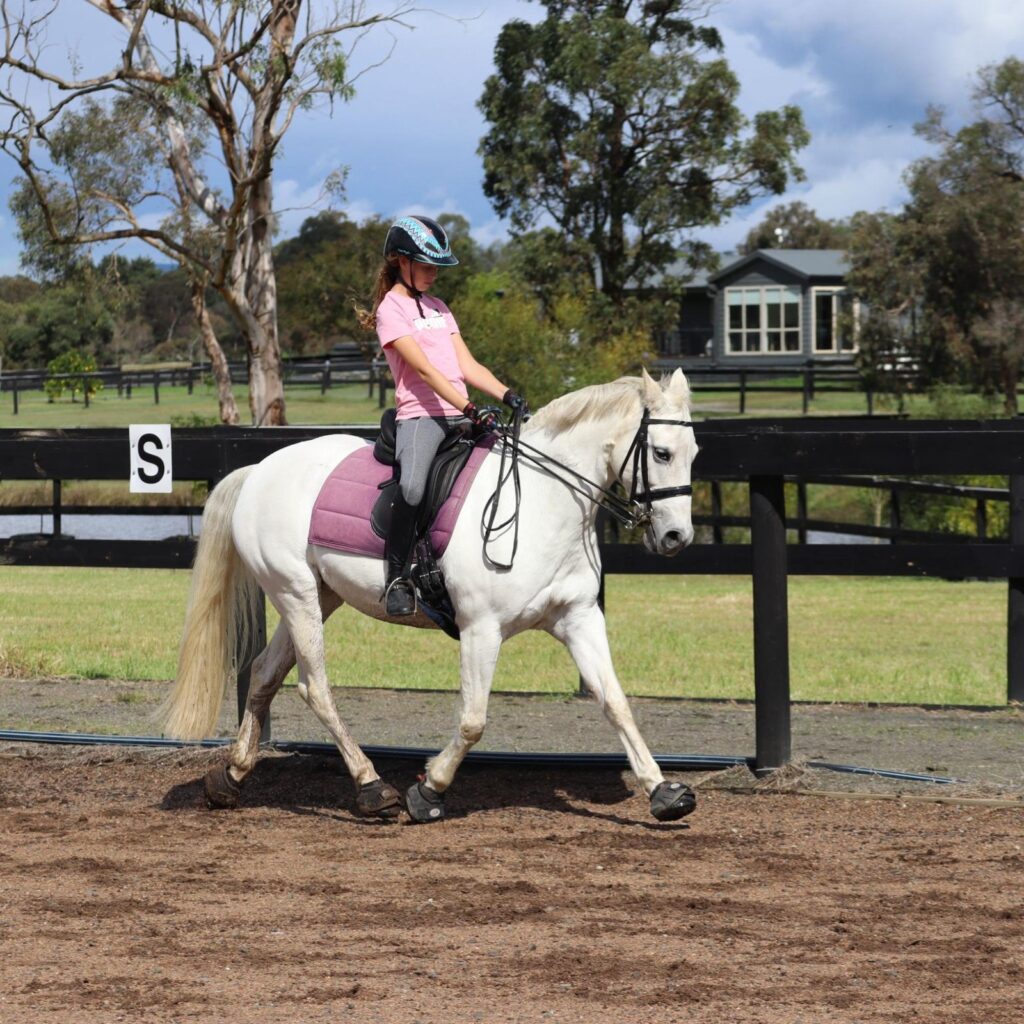
“I had never thought about using boots on our dressage horses as I always thought they were more for trail riding. We moved agistment and found that with my daughter Emily’s pony Mistie, the sand was a bit more abrasive than what we were used to and 3 out of her 4 hooves were showing signs of cracks forming in the toes. The farrier was starting to talk about the need for shoes, but Mistie is 16 years old and never been shod, so we didn’t really want to go down that path. We contacted Cavallo for advice and was recommended a full set of Trek boots with pastern wraps. Mistie trains Medium level dressage, so we needed boots that would not affect her movement at all, but she moves and performs really well in her boots, with no change to her training at all. The pastern wraps are really good in the arena as they stop any sand that may get into the boots from rubbing. I’m now thinking of transitioning my dressage horse to barefoot and use boots on him when needed too, the result has been that good!
Thanks again for all of your help!”
Jenny Farthing
Ready to choose?
Find the Right Boot for Your Horse
A properly fitted hoof boot protects a sensitive hoof from abrasion and difficult terrain while healthier wall grows down. Measure after a fresh trim, then choose the boot that suits your horse.
Bazay, Casie, BS, NBCAAM. “Hoof Cracks in Horses and How to Treat Them.” Mad Barn. Reviewed by Emily Gilbert, PhD; veterinary review by Madison Ricard, DVM, PhD, DACVP. Updated July 22, 2026.
Beasley, Brian, DVM. “Hoof Cracks in Horses.” MSD Veterinary Manual. Full review June 2024.
O’Grady, Stephen E. “How to Manage Hoof Wall Defects.” Reprinted from the 2024 American Association of Equine Practitioners Convention Proceedings.
Pleasant, R. Scott, Stephen E. O’Grady, and Ian McKinlay. “Farriery for Hoof Wall Defects: Quarter Cracks and Toe Cracks.” Veterinary Clinics of North America: Equine Practice 28, no. 2 (2012): 393–406.
Cookies
Hold Your Horses!
We use cookies to enhance your browsing experience, serve personalized ads or content, and analyze our traffic. By clicking "Accept All", you consent to our use of cookies.