Cavallo Companion
How Do Wild Horses Maintain Their Hooves?
If wild horses never see a farrier, how do they keep their hooves from becoming overgrown?
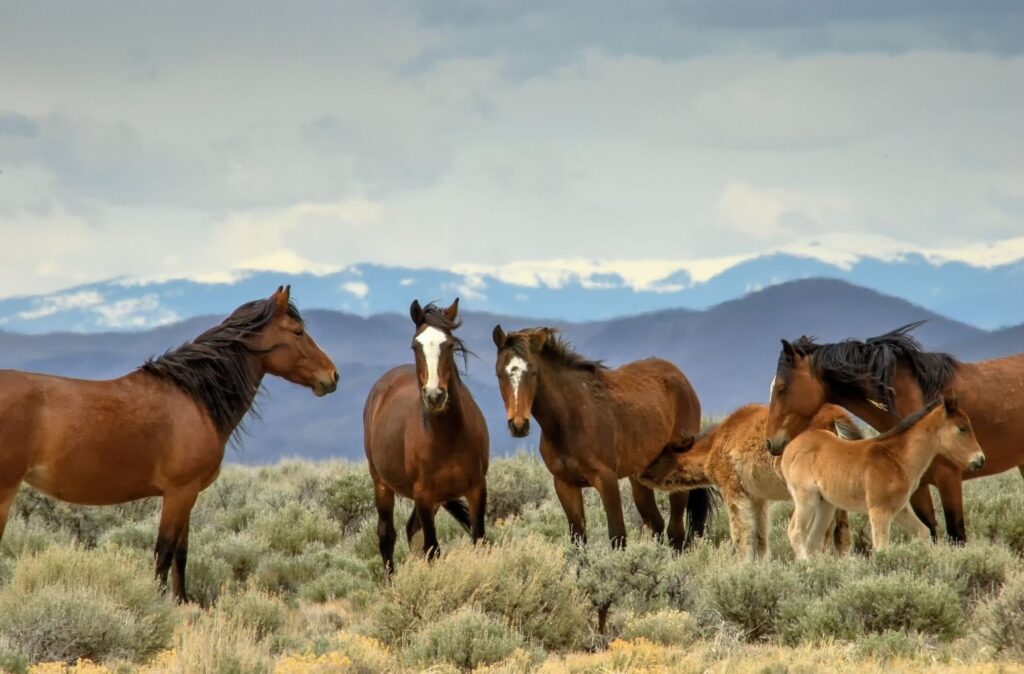
It’s a question horse owners have asked for years, and understandably so. Wild horses don’t receive regular trims, yet many travel mile after mile over challenging terrain with hooves that allow them to forage, migrate and survive.
The answer isn’t that wild horses have “perfect” feet. It’s that their lifestyle naturally creates a balance between hoof growth and hoof wear. Understanding that balance can teach us a great deal about supporting healthy domestic horses, not by trying to copy nature exactly, but by learning from it.
Research tells us there is no single “wild hoof.” Hoof shape and condition vary according to terrain, climate, nutrition, genetics, how far horses travel and their overall health. That’s important because it reminds us there isn’t one perfect hoof for every horse. Instead, there are principles that help hooves function well, regardless of where a horse lives.
How Do Wild Horses Maintain Their Hooves Without Trimming?
Wild horses spend much of their day travelling between grazing areas, water, shelter and resting places. Unlike many domestic horses, they rarely have everything they need within a few steps. Depending on their environment, they may cover many kilometres each day over sand, soil, gravel, rock and a wide variety of natural surfaces.
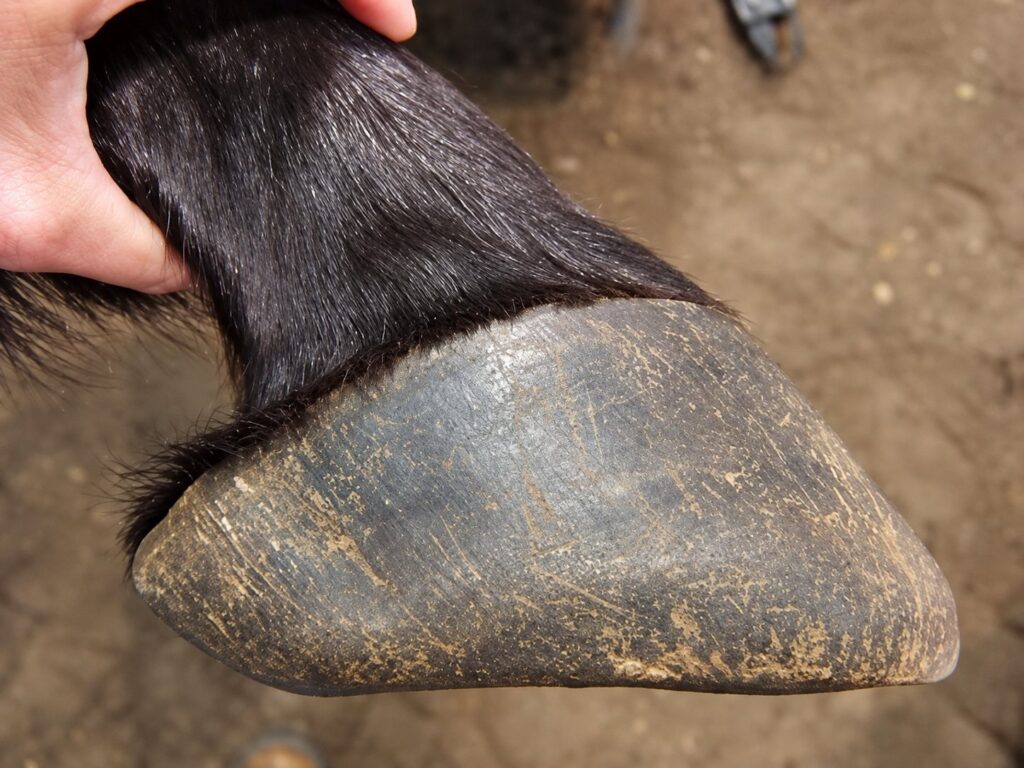
Every step creates a small amount of friction between the hoof and the ground. Over thousands of steps, this gradual wear continually balances the hoof’s natural growth. Rather than removing excess hoof every six or eight weeks, nature trims the hoof a little at a time.
Researchers studying 100 Australian feral horses found exactly what we might expect.
Horses travelling longer distances over harder ground generally had shorter hoof walls with less flaring. Horses living on softer terrain often developed longer, more flared hooves, sometimes resembling the overgrown feet we occasionally see in domestic horses that go too long between trims.
The lesson isn’t that every horse should live on rocky ground. It’s that movement and environment work together to influence hoof health.
Why Is Movement Important for Horse Hoof Health?
Every step your horse takes does much more than move them forward.
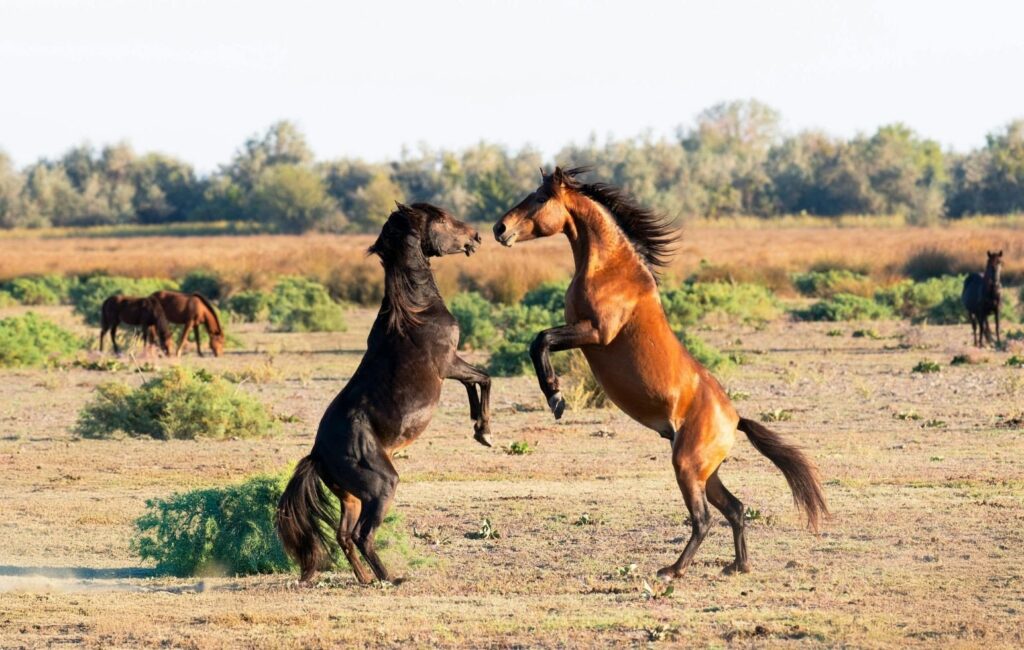
When the hoof lands, it flexes slightly, allowing the frog, digital cushion and back of the hoof to absorb concussion while helping circulate blood through the foot. That circulation delivers oxygen and nutrients to the tissues responsible for growing healthy hoof horn. The hoof was designed to move, and the more comfortably a horse moves, the more opportunities the hoof has to perform these important functions.
Compare that with many domestic horses. Hay is beside the shelter. Water is only a few steps away. Friends are already standing nearby. A horse can comfortably meet every daily need while walking surprisingly little. That’s why turnout doesn’t automatically equal movement. Two horses may spend the same number of hours outside, yet one walks several kilometres while another rarely leaves the hay feeder. It’s not simply the amount of turnout that matters – it’s what encourages the horse to keep moving throughout the day.
The challenge, of course, is that horses don’t choose to move if every step hurts. Whether discomfort comes from thin soles, a recent trim, rocky footing, bruising or a hoof condition, pain naturally discourages movement. That’s one reason protecting the hoof can actually support healthier hoof function. A comfortable horse is far more likely to keep walking, and every comfortable step contributes to circulation, conditioning and healthier hoof development.
What Role Does Terrain and Climate Play in Hoof Wear, Growth, and Health?
Firm ground naturally creates more hoof wear than lush pasture, mud or deep arena footing. Uneven terrain also challenges the hoof differently as horses travel over slopes, stones and changing surfaces.
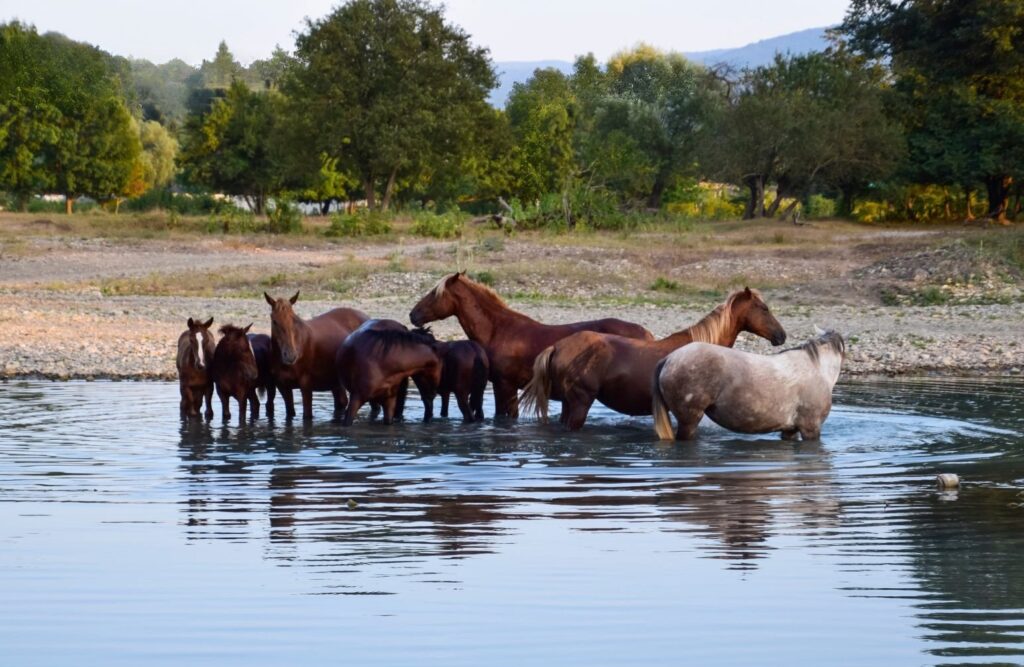
Water is part of that natural variation, too. Wild horses may travel considerable distances to drink, often standing at the water’s edge or wading into the shallows. They cross streams and move through wet ground, but they also continue travelling over surfaces where their hooves can dry again. Their feet experience moisture as part of the landscape rather than remaining continually wet.
But harder ground or adding moisture isn’t always better for domestic horses. A horse that has spent months living on soft pasture shouldn’t suddenly be expected to comfortably travel miles over gravel or rocky trails. Like any athlete, horses need time to adapt. Gradually introducing varied footing lets both the hoof and its internal structures strengthen without unnecessary soreness.
The best way to help a horse adapt isn’t by asking them to endure discomfort; it’s by protecting the hoof while it continues to strengthen. Temporary hoof protection can make the difference between a horse that chooses to move and one that stands still to avoid pain. The goal is never to “toughen up” a sensitive horse. The goal is comfortable movement that builds healthier, stronger feet over time.
Do All Wild Horses Have Healthy Hooves?
This is perhaps the biggest misconception about wild horses. Life in the wild isn’t easy. Wild horses develop hoof cracks, injuries, infections, excessive wear, conformational abnormalities and disease just as domestic horses can. Some live on terrain that provides too little natural wear, while others endure harsh conditions that wear the hoof faster than it can grow.
Research has documented both remarkable adaptations and significant abnormalities in feral horse feet. Survival is not the same as ideal hoof health. The horses we admire are often those that have successfully adapted to their environment, while others simply don’t.
The wild hoof is fascinating to study, but it should never be viewed as one perfect model that every domestic horse should imitate. Good hoof care always considers the individual horse, their conformation, workload, environment and overall health.
What Can We Learn from Wild Horses?
Although we can’t recreate life in the wild, we can apply many of the same principles.
Encourage movement. Give horses a reason to walk by separating hay, water and shelter whenever it’s practical and safe. Track systems, multiple feeding stations and thoughtful paddock design can all encourage natural movement throughout the day.
- Encourage more daily movement. Place hay, water and shelter in different safe areas when possible. Multiple slow-feeding stations or a thoughtfully designed track system can encourage horses to walk throughout the day.
- Offer varied, horse-appropriate footing. Gradual exposure to different surfaces can help prepare hooves for the terrain a horse is expected to work on. Changes should always respect the horse’s current comfort level.
- Maintain a regular trim schedule. Nature trims wild horses a little every day. Domestic horses usually don’t have that opportunity. Regular trimming replaces the natural wear many horses simply don’t experience.
- Support whole-horse health. Balanced nutrition, suitable body condition, social interaction, turnout and prompt attention to health concerns all contribute to the environment in which hooves grow.
- Watch how the horse moves. Shortened strides, hesitation on firm ground, frequent stumbling or a preference for the soft edge of a trail may indicate discomfort. These signs should not be dismissed as stubbornness.
Horses are remarkably stoic, and by the time obvious lameness appears, they’ve often been compensating for quite some time.
Domestic Horses Live Different Lives Than Wild Horses
One of the biggest mistakes we can make is assuming our horses should cope with exactly the same conditions as wild horses.
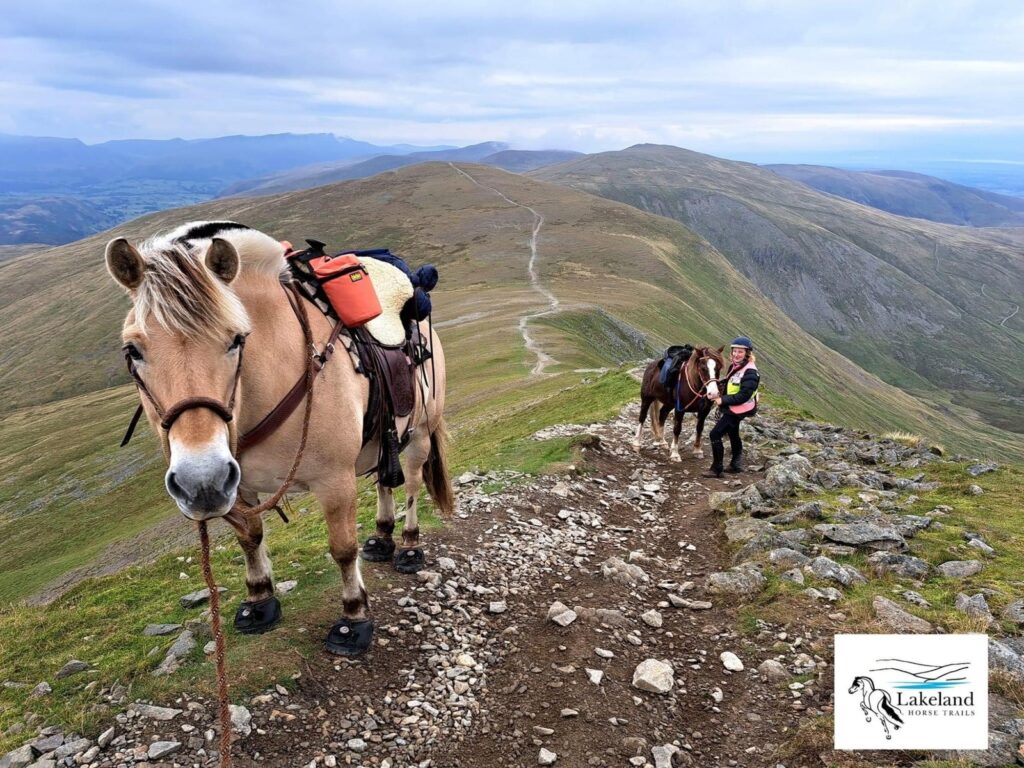
Wild horses don’t carry riders. They don’t travel long distances over gravel roads because someone planned a trail ride. They don’t compete, pull carriages, work on pavement or spend hours standing in trailers before being asked to perform.
Domestic horses place distinct demands on their feet, but that doesn’t indicate inherent weakness. They simply lack the constant travel and diverse footing that naturally shape wild hooves.
Wild herds demonstrate that strong hoof function stems from steady movement, diverse environments and natural wear. Not magic.
When caring for domestic horses, we must recognize that their daily needs remain unique. Just as we wear hiking boots on rough trails or running shoes on pavement, domestic horses sometimes benefit from extra protection. Providing hoof protection doesn’t prevent healthy hoof function – it can actually encourage it by allowing horses to move comfortably over terrain that might otherwise limit their willingness to walk.
This is the philosophy behind the “Barefoot & Booted” approach. Healthy barefoot hooves remain the goal, while hoof boots provide protection whenever the horse’s environment, workload or comfort requires additional support. Rather than choosing between barefoot and protection, horses benefit from both.
Bringing the Lesson Home – Managing Domesticated Hoof Care
Wild horses remind us that healthy hooves are the product of movement, environment and thoughtful adaptation. Not magic.
We don’t need to recreate life in the wild, nor should we try. Domestic horses live very different lives with different workloads, footing and expectations. Fortunately, they also benefit from something wild horses never receive: attentive care.
By encouraging comfortable movement, maintaining regular professional hoof care, providing appropriate footing and protecting the hoof whenever additional support is needed, we can combine the best lessons from nature with the advantages of modern hoof care.
Healthy barefoot hooves and hoof boots are not opposing ideas; they work together. A horse with healthy hooves is better prepared to wear hoof boots when protection is needed, and a horse wearing hoof boots is often able to remain comfortably active while continuing to develop stronger, healthier hooves underneath.
Perhaps this is the greatest lesson wild horses have to offer. We don’t need to imitate their lives. We simply need to understand the principles behind what keeps them moving and thoughtfully apply those lessons to the horses who depend on us every day.
Ready to choose?
Find the Right Boot for Your Horse
Healthy barefoot hooves remain the goal, and hoof boots give protection whenever the ground, the workload or your horse’s comfort asks for more. Measure after a fresh trim, then choose the boot that suits your horse.
Sources
- Hampson, B. A., de Laat, M. A., Mills, P. C., & Pollitt, C. C. (2013). The feral horse foot. Part A: Observational study of the effect of environment on the morphometrics of the feet of 100 Australian feral horses. Australian Veterinary Journal, 91(1-2), 14-22.
- Hampson, B. A., de Laat, M. A., Mills, P. C., & Pollitt, C. C. (2013). The feral horse foot. Part B: Radiographic, gross visual and histopathological parameters of foot health in 100 Australian feral horses. Australian Veterinary Journal, 91(1-2), 23-30.
- Mellish, M. A., Lucas, Z., Lancaster, L., Stull, J. W., & Floyd, A. (2023). Visual and morphometric description of feral horse hooves from Sable Island National Park Reserve. Canadian Veterinary Journal, 64(11), 1028-1034.