Cavallo Companion
Thrush in Horses: Causes, Signs, Prevention, and Everyday Hoof Care
Thrush causes the frog’s horn tissue to break down, often affecting the central groove and the grooves along either side.
This guide is intended for general education and does not replace veterinary diagnosis or treatment. If you suspect your horse has thrush, contact your veterinarian.
What Is Thrush in a Horse’s Hoof?
Thrush is one of those hoof problems you may smell before you see. You pick up your horse’s foot, begin cleaning, and there it is, that unmistakable odour, often with dark material tucked into the grooves around the frog. Your horse might stand quietly or pull away when you touch a tender spot. Those few minutes of everyday hoof care give you a chance to notice changes early, get a closer look, and help keep your horse comfortable.
The frog is the wedge-shaped structure on the underside of the hoof. It helps with traction, cushioning, and normal hoof function as your horse moves. A healthy frog should feel firm with some flexibility, and its grooves should be accessible for gentle cleaning.
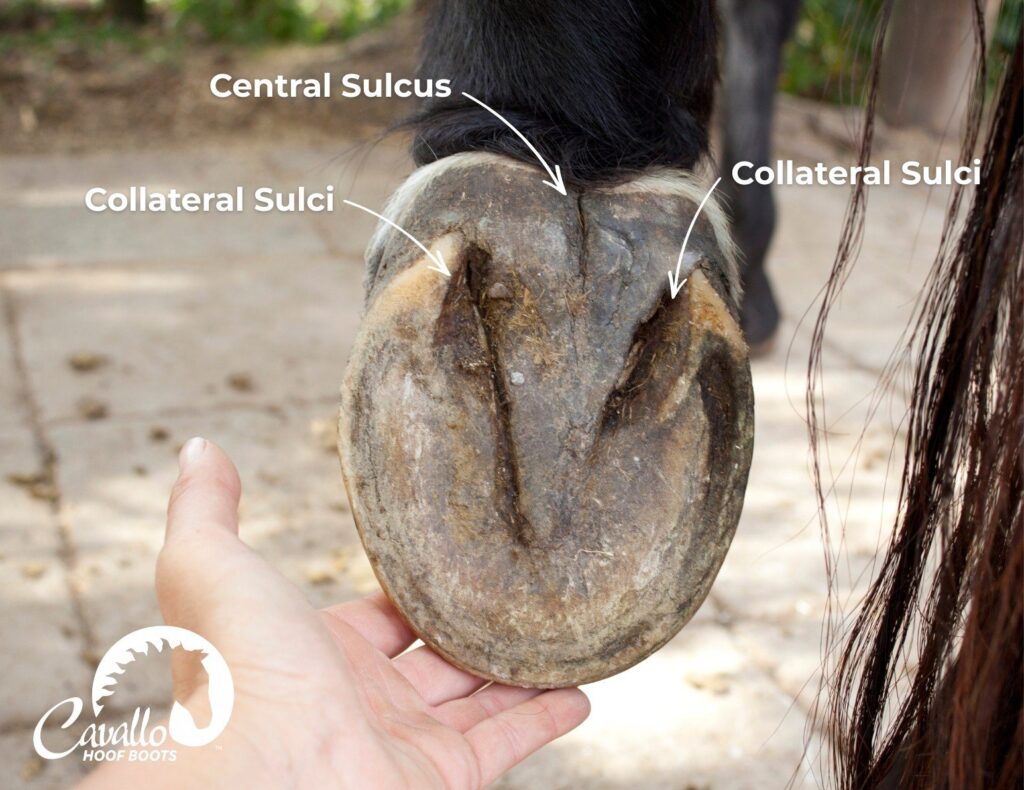
The groove down the middle is called the central sulcus, and the grooves along either side are the collateral sulci. You don’t need to remember the terminology to take good care of your horse’s feet, but knowing where these grooves are helps you check them consistently. A strong foul smell, black discharge, obvious tenderness, or a deep split extending between the heel bulbs deserves attention.
What Causes Thrush in Horses?
Thrush often develops when several contributing factors come together. Prolonged exposure to wet or manure-contaminated footing, trapped debris, deep frog grooves, narrow or contracted heels, irregular hoof care, and limited movement can all play a part.
Mud, manure, urine, and damp bedding can pack into the grooves around the frog, creating an environment with little air where microorganisms can thrive. Think about the places your horse visits throughout the day: the gateway, water trough, hay feeder, shelter, and favourite standing spot. These areas often become wet and dirty before the rest of the paddock does.
Hoof shape matters, too. Deep or narrow grooves can hold debris in pockets that are difficult to reach. Overgrown or imbalanced feet may make cleaning harder, and limited movement may reduce the natural loading and unloading of the back of the hoof.
Some horses get through wet weather without developing thrush, while others struggle with recurring problems despite attentive care. Thrush can occur in clean, dry environments as well. If it keeps returning, ask your hoof-care provider to assess the shape and balance of the foot alongside your horse’s environment and routine.
What Are the Signs of Thrush in Horses?
The most recognizable signs of thrush are a foul smell, dark grey or black discharge, and soft, deteriorating frog tissue. You may also notice slimy material beneath packed debris, ragged or crumbly areas, a deepening central groove, or tenderness when you clean the foot.
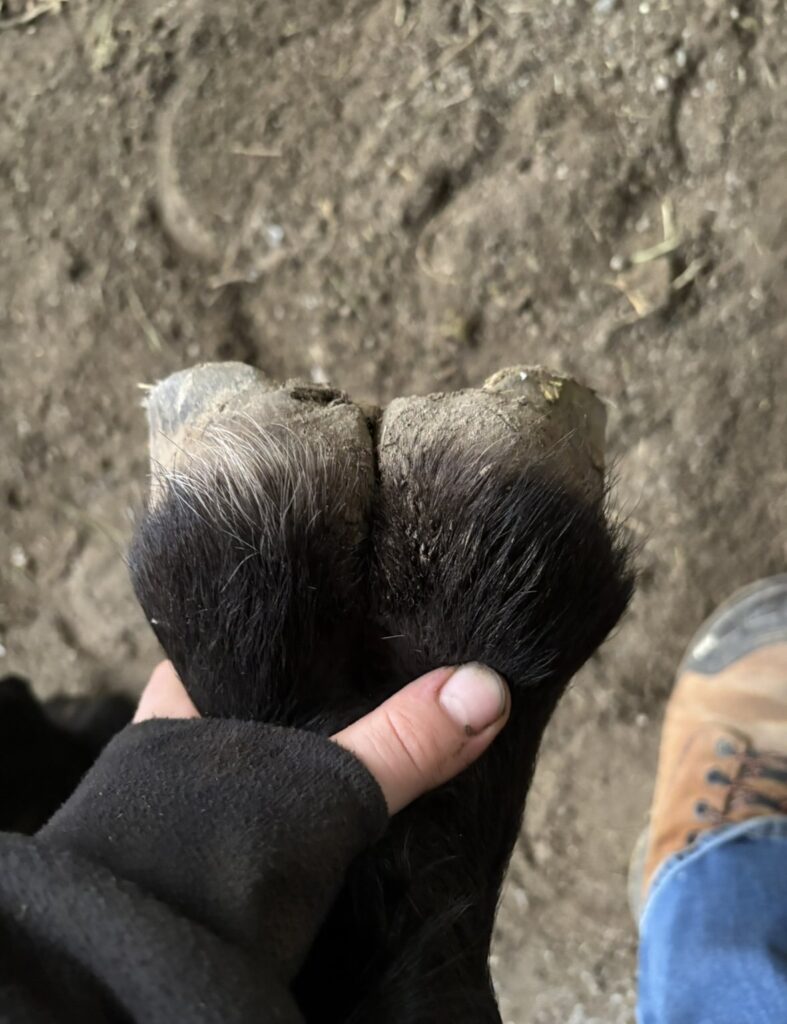
Your horse’s behaviour can offer another clue. Some horses continue moving normally, particularly when the problem is superficial. Others shorten their stride, become cautious on firm or rocky footing, or pull their foot away when you reach a sensitive area. Those changes can have several causes, so they deserve attention even when you suspect thrush.
Take particular care with a narrow crack through the centre of the frog. The opening may look small while extending deeper than you expect. Use a gentle hand and pause if your horse flinches. Trying to dig out every last bit of material can hurt sensitive tissue.
Regular cleaning helps you learn what is normal for your horse. Once you know the usual smell, texture, and shape of their frog, a small change becomes much easier to spot.
Is Every Unhealthy-Looking Frog Thrush?
Not every dark, smelly, painful, or unusual-looking frog should automatically be assumed to have thrush.
Other hoof conditions can cause abnormal tissue or discomfort. Canker, for example, can affect the frog but typically creates proliferative or frond-like tissue rather than the deteriorating frog tissue commonly associated with thrush.
Ask your veterinarian or hoof-care provider to examine the hoof if you notice:
- Lameness
- Heat or swelling around the hoof
- A stronger-than-normal digital pulse
- Frog tissue that bleeds easily
- White, raised, or unusual tissue
- A deep or painful central sulcus
- Ongoing deterioration
- A problem that repeatedly returns
- Uncertainty about what you are seeing
Avoid cutting away deep frog tissue or forcefully probing a narrow crack yourself. Your hoof-care provider can assess the structure and balance of the hoof, while your veterinarian can evaluate pain and rule out more serious conditions.
How Can You Help Prevent Thrush in Horses?
Preventing thrush means reducing the time your horse’s feet spend wet, dirty, and packed with debris, while keeping up with regular hoof care. During a rainy winter or muddy spring, perfectly dry feet may be unrealistic. The practical goal is to reduce how long the hooves remain wet, dirty, and packed with debris!
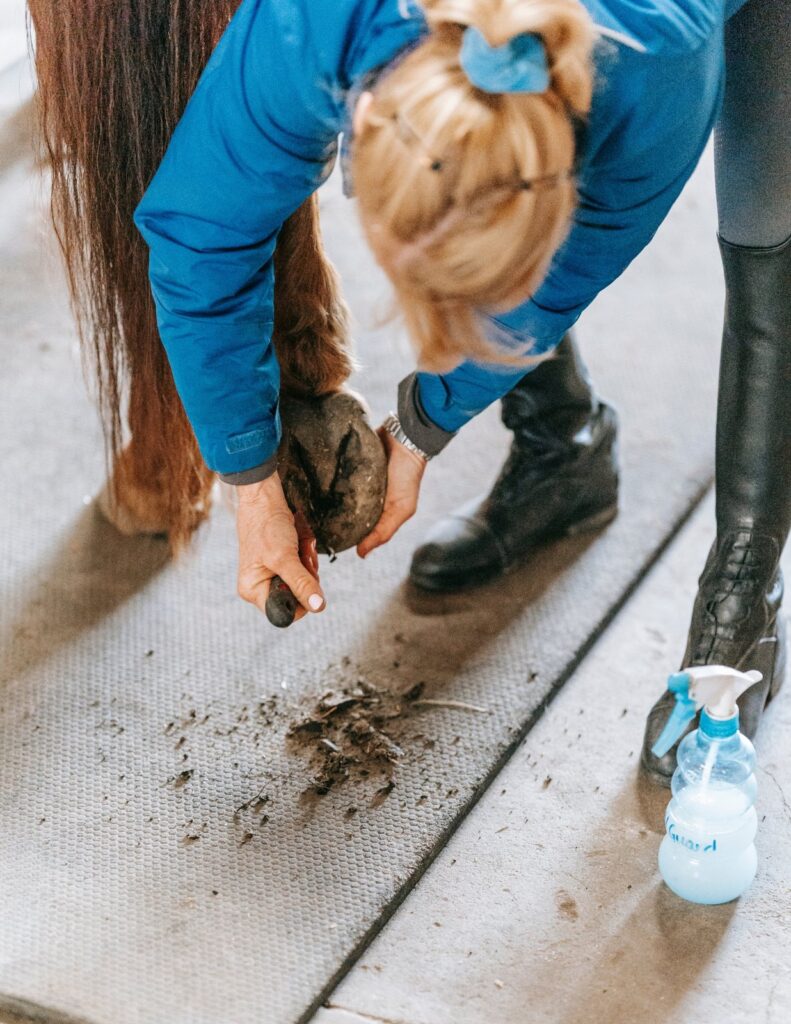
Make Regular Hoof Cleaning Part of the Day
Pick out the hooves regularly, gently removing mud, manure, stones, and bedding from the grooves around the frog. Work carefully from the heel towards the toe, paying attention to deep or sensitive areas.
As you clean, check for a new smell, dark discharge, changes in frog texture, loose tissue, a deepening groove, cracks, separation, or tenderness. This small routine removes packed material and gives you a useful daily picture of how the feet are doing.
Improve the Areas Your Horse Uses Most
Start with the places where your horse spends the most time. Removing manure, moving feeders, improving drainage, or adding suitable footing around gateways and water troughs can help reduce prolonged exposure to mud and waste. A clean, firm standing area gives the feet a welcome break.
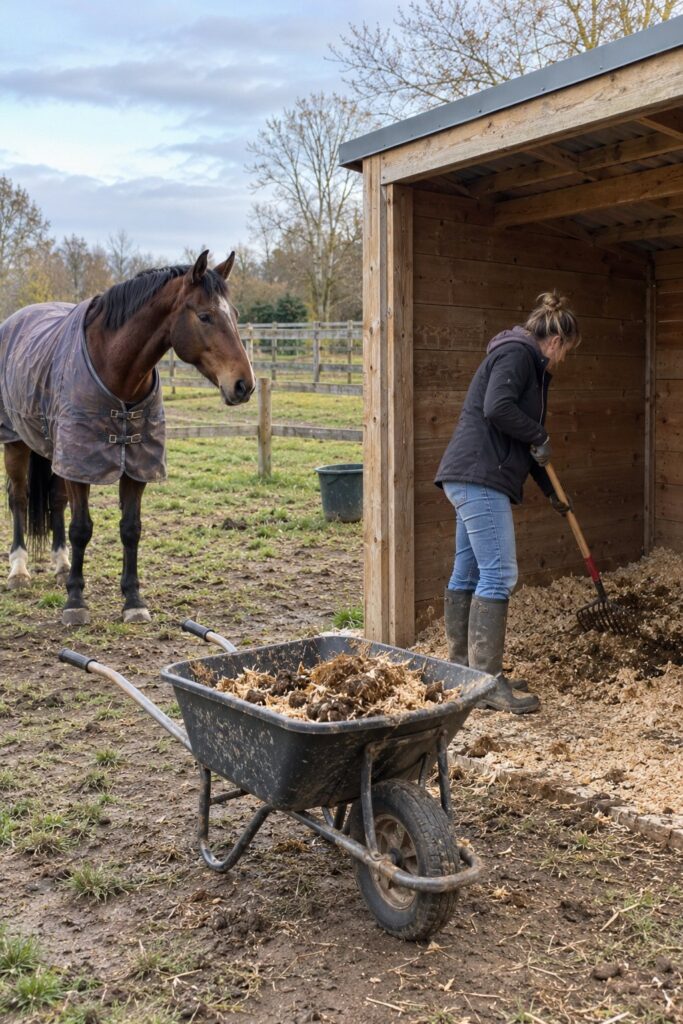
In the stall, remove wet bedding often enough that your horse has a clean place to stand and rest. You don’t have to fix every muddy patch overnight. Focus first on the changes that will make the biggest difference to your horse’s day.
Keep a Consistent Trimming Schedule
Regular trimming helps maintain hoof balance and gives your hoof-care provider an opportunity to notice changes before they become more troublesome. Overgrown heels, folded bars, contracted heels, and deep grooves can create spaces where debris becomes trapped.
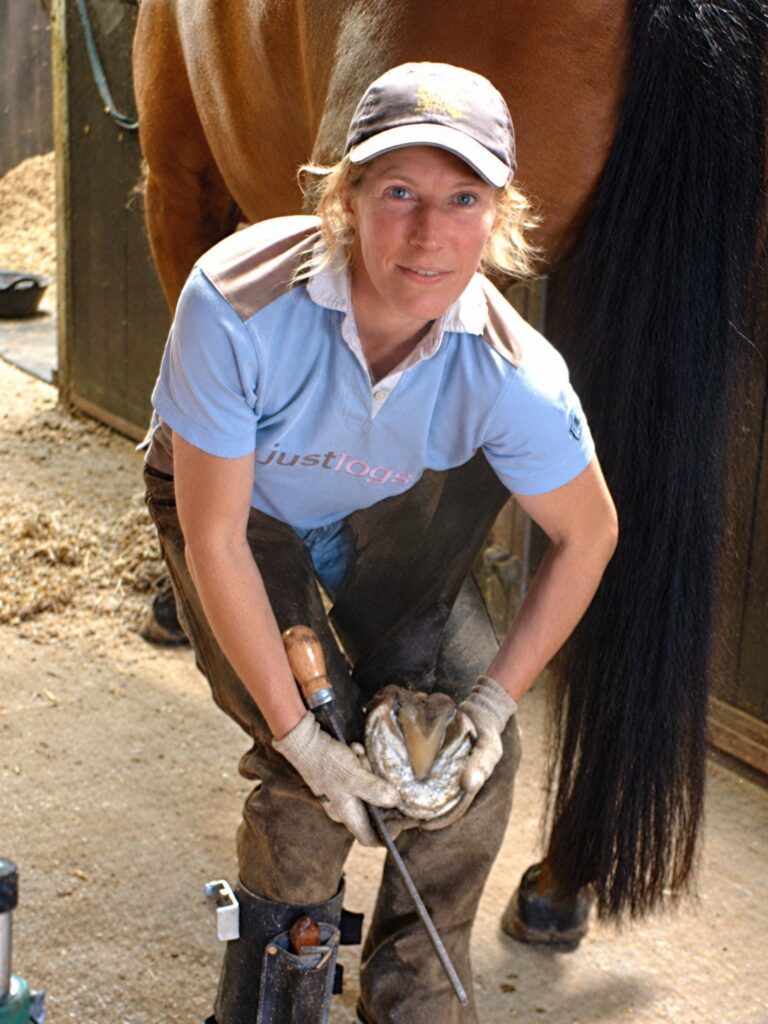
Your horse’s ideal trimming interval depends on hoof growth, season, environment, workload, and individual needs. Merck gives a general range of four to eight weeks; some horses need appointments every four to six weeks. Ask your trimmer or farrier what suits your horse rather than waiting until the feet look noticeably overgrown.
Encourage Comfortable Movement
Appropriate movement supports circulation and normal hoof function.
Turnout, hand-walking, or riding may be helpful when the horse is comfortable and the footing is suitable. Movement should never be used to push a painful horse through obvious discomfort.
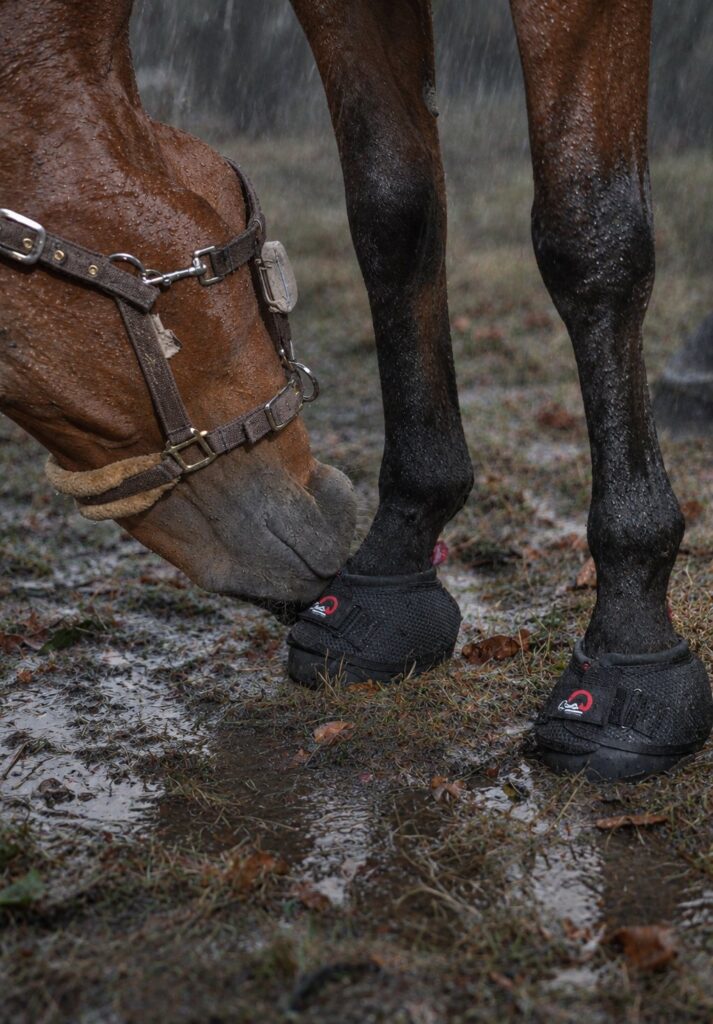
If the horse is reluctant to move, landing unusually, or becoming increasingly sensitive, ask your veterinarian or hoof-care provider for guidance before increasing exercise, and consider hoof boots as a removable form of hoof protection.
How Is Thrush Treated?
Thrush treatment generally involves careful cleaning, professional attention to affected tissue when needed, an appropriate topical treatment, and changes to any contributing conditions. The depth of tissue involvement helps determine which treatment is suitable.
It’s understandable to want something strong when you find a smelly, deteriorating frog, but damaged tissue needs care. Some topical products can cause further injury to sensitive tissue. Ask your veterinarian to recommend a suitable treatment and explain how often to apply it, how long to use it, and what improvement should look like.
Clays, apple cider vinegar, and diluted essential oils are sometimes suggested for hoof care. However, a natural ingredient isn’t automatically gentle, effective, or appropriate for a painful frog. Check with your veterinarian before using these products, especially where there is a deep crack, bleeding, or exposed tissue.
Follow the treatment directions and keep watching your horse’s comfort and the condition of the frog. Ask whether an ongoing preventative product is appropriate for your horse rather than assuming every hoof needs one. If the problem worsens, fails to improve, or returns repeatedly, have it reassessed.
A Simple Daily Thrush-Prevention Routine (Cavallo Cheatsheet)
Good everyday care does not need to be complicated:
- Pick out the hooves regularly.
- Check the smell, texture, and depth of the frog grooves.
- Remove manure from stalls and high-traffic areas.
- Provide access to firmer, cleaner ground.
- Maintain an appropriate trimming schedule.
- Encourage movement the horse can perform comfortably.
- Clean and dry hoof boots between uses.
- Apply a gentle topical prevention.
- Ask for professional help when the horse is painful, or the tissue looks unusual.
Can Hoof Boots Help During Thrush Care?
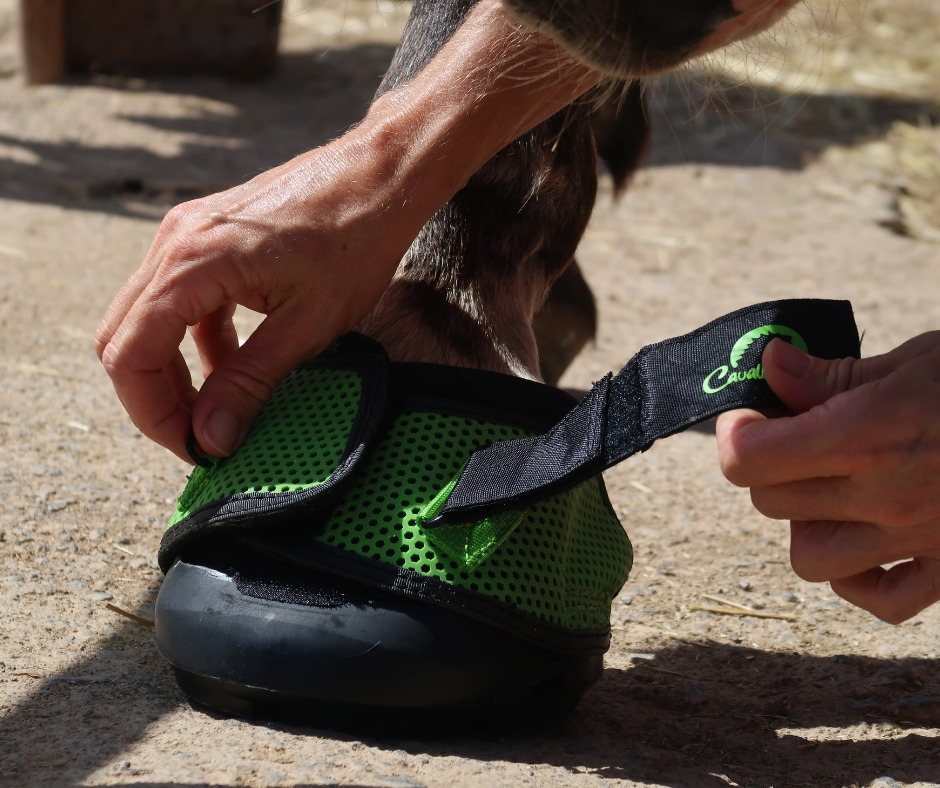
Properly fitted hoof boots may help protect a sensitive hoof and make movement more comfortable during thrush care. Depending on the boot and how it is used, it may also limit contact with dirt and manure. If you intend to use a boot to hold a treatment against the hoof, ask your veterinarian whether that is appropriate and how long the boot should remain on.
Before fitting the boot, gently pick out the hoof and inspect the frog and surrounding tissue. Make sure the boot is clean and dry, check the fit, and watch for rubbing or discomfort. Remove it according to the recommended wearing schedule, then clean and dry it thoroughly.
Checking boots regularly matters. After riding through mud or water, rinse away packed material and leave the boots open until they are fully dry. Used thoughtfully, they can be a helpful part of your horse’s care alongside regular trimming, environmental improvements, and appropriate treatment.
Common Questions about Thrush in Horses
Can a Horse Have Thrush Without Being Lame?
Yes. Mild or superficial thrush may be present without obvious lameness. Check the frog’s smell, discharge, texture, and response to gentle cleaning even when your horse appears to move comfortably.
Can a Horse Develop Thrush in a Clean, Dry Environment?
Yes. Clean footing and attentive hoof care help, but they don’t prevent every case. Deep frog grooves, narrow heels, and other individual factors can contribute, so recurring thrush deserves a broader assessment.
Should You Exercise a Horse with Thrush?
Movement may be appropriate when your horse is comfortable and the footing is suitable. If your horse is lame, reluctant to move, or increasingly sensitive, ask your veterinarian for guidance before continuing or increasing exercise.
Why Does Thrush Keep Coming Back?
Recurring thrush may mean that contributing conditions remain, the hoof has features that make debris difficult to clear, or the problem needs a different treatment approach. A joint review of the hoof, environment, and care routine with your veterinarian and hoof-care provider can help identify what needs to change.
Catching changes early gives you more opportunity to address them before your horse becomes uncomfortable. With consistent daily care and the right support, you can help keep those feet healthier and your horse moving happily.
Ready to choose?
Find the Right Boot for Your Horse
Properly fitted hoof boots may help protect a sensitive hoof during thrush care, and they come off to be cleaned and dried between uses. Measure after a fresh trim, then choose the boot that suits your horse.
Sources
- Merck Veterinary Manual. “Thrush in Horses.” Reviewed by Brian Beasley, DVM, University of Georgia. Updated June 2024.
- Merck Veterinary Manual. “Foot Care of Horses.” Reviewed by Bonnie R. Rush, DVM, MS, DACVIM, Kansas State University.
- Merck Veterinary Manual. “Canker in Horses.” Reviewed by Brian Beasley, DVM, University of Georgia. Updated June 2024.