Cavallo Companion
White Line Disease in Horses: Symptoms, Causes, Treatment, and Recovery Guide
White line disease is a separation within the inner hoof wall.
Your horse may appear perfectly comfortable, but during a routine trim, your farrier or hoof care professional may notice a small pocket of crumbly horn near the toe. Perhaps the white line looks slightly wider than normal, dirt keeps collecting in the same place, or part of the hoof wall sounds hollow when tapped.
These subtle changes are often the first signs of white line disease.
Many horses show little or no discomfort in the early stages, which is why the condition is often discovered during routine hoof care rather than after the horse becomes lame. Left untreated, however, the separation can gradually spread, weakening the hoof wall and reducing its support.
The good news is that white line disease is highly manageable when recognized early. Good hoof balance, regular professional care, a clean environment, and appropriate movement all help create the conditions for healthy hoof growth and replacement of the damaged area.
This guide is intended for general education and does not replace veterinary diagnosis or treatment. If you suspect your horse has white line disease, contact your veterinarian.
What Is White Line Disease in Horses?
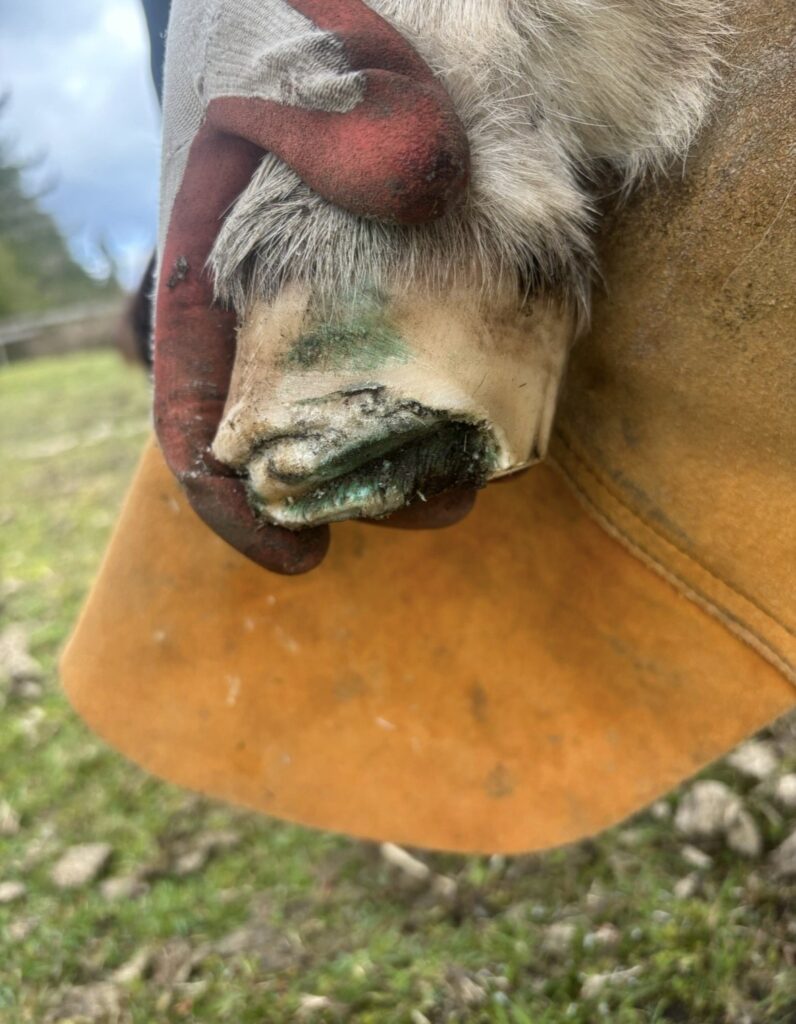
White line disease is a separation within the inner hoof wall. As that connection weakens, a cavity develops beneath what may still look like a healthy hoof wall. The separation most often begins around the toe or quarters, although it can occur almost anywhere around the hoof and may affect one foot or several.
Despite its name, the condition isn’t limited to the narrow white line visible on the bottom of the hoof. That white line simply marks where the hoof wall meets the sole.
Just above it, the inner hoof wall connects with thousands of tiny interlocking laminae that suspend the coffin bone securely within the hoof capsule.
When this connection begins to separate, small spaces develop beneath the outer hoof wall. Dirt, moisture, and naturally occurring bacteria and fungi can then enter and gradually break down the weakened horn. Left unchecked, the separation can spread unless you address the underlying cause.
What Happens Inside a Horse’s Hoof?
White line disease usually begins with a small weakness in the inner hoof wall. A long toe, hoof flare, previous laminitis, or another source of mechanical stress can create enough separation for dirt and debris to enter. Over time, the horn inside the cavity becomes chalky or crumbly while the separation gradually extends beneath the hoof wall.
Many people assume bacteria or fungi are the primary cause of white line disease. In reality, they are opportunists. They colonize an area that has already been weakened rather than causing the original separation.
That is why topical treatments alone rarely solve the problem. Lasting improvement usually comes from restoring good hoof balance, removing loose horn where appropriate, addressing the underlying cause, and allowing healthy hoof wall to grow down.

What Causes White Line Disease in Horses?
White line disease rarely develops for a single reason. More often, it results from several factors working together. Hoof balance, the way a horse moves, environmental conditions, horn quality, and underlying health issues can all contribute.
One of the most important things to understand is that the bacteria and fungi found within a white line cavity are usually opportunists, not the original cause. They invade horn that has already been weakened or separated. Unless you correct the underlying problem, simply treating the cavity is unlikely to prevent it from returning.
Hoof Balance and Mechanics
In our experience, poor hoof balance is one of the biggest contributors to white line disease.
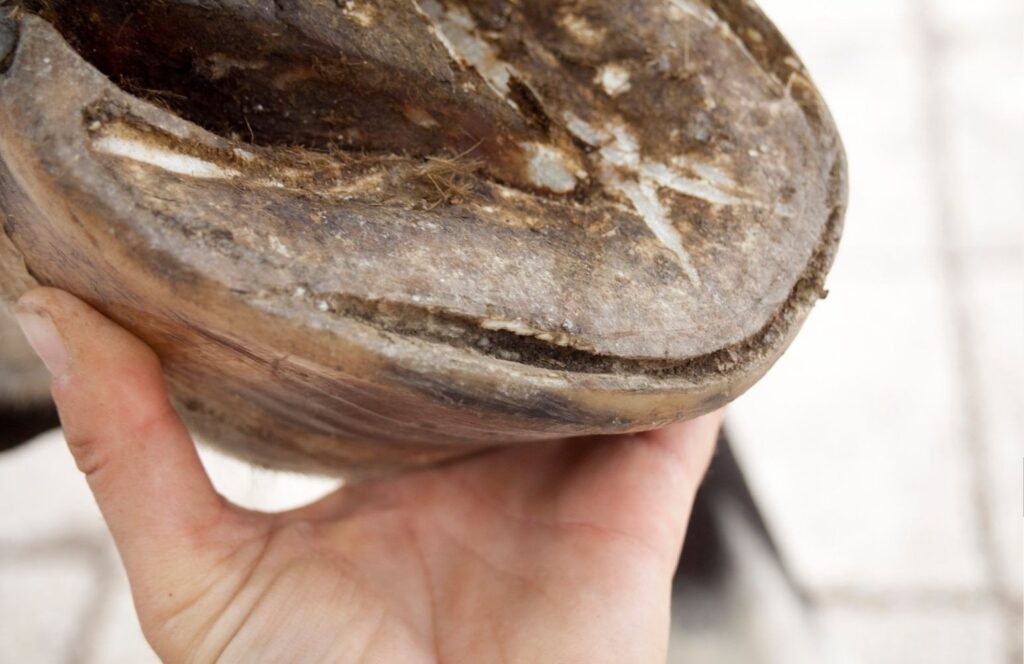
A long toe, flared hoof wall, underrun heel, or uneven loading places extra stress on the inner hoof wall. With every step, that leverage stretches the white line, gradually creating the small separations where white line disease begins.
Regular, balanced trimming helps distribute forces more evenly, reducing the mechanical stress that allows these cavities to develop.
Previous Laminitis
Horses that have experienced laminitis are often more susceptible because the laminae may already have been weakened.
Even after the horse appears comfortable, the white line can remain stretched, particularly around the toe, creating an opportunity for dirt and microorganisms to enter.
If your horse experiences recurring white line disease, widening of the white line, unusual hoof rings, tenderness in more than one foot, or changes in body condition such as regional fat deposits, it is worth discussing conditions such as Equine Metabolic Syndrome (EMS), insulin dysregulation, or PPID with your veterinarian. Identifying and managing these conditions can significantly improve long-term hoof health.
Cracks and Hoof Damage
Hoof cracks, old abscess tracts, nail holes, and other injuries can also provide an entry point for white line disease.
Think of them as small doorways into the hoof. Once that protective barrier is compromised, dirt and debris can work their way inside, especially if mechanical stress continues to pull on the area.
Mud, Moisture, and the Environment
Many people associate white line disease with wet, muddy conditions. Prolonged exposure to mud, manure, or wet bedding can soften already weakened horn and make the problem harder to manage.
But wet weather is not the whole story.
White line disease can also occur in horses living in dry climates. Hooves that become excessively dry, brittle, or cracked can develop the same type of separation. The goal is not simply to keep hooves dry. It is to maintain strong, resilient horn while avoiding conditions that continually weaken it.
Providing clean footing and picking out your horse’s feet daily are simple habits that can make a meaningful difference.
Horn Quality and Nutrition
Healthy hoof horn starts from within.
A horse needs adequate energy, quality protein, vitamins, and minerals to grow strong, resilient hoof wall. If the horn is consistently weak, slow-growing, or prone to cracking, it may be worth reviewing the entire diet with your veterinarian or a qualified equine nutritionist.
While supplements can play a role, no product can compensate for an unbalanced diet. Looking at your horse’s overall nutrition is usually the most effective place to begin.
Signs and Symptoms of White Line Disease in Horses
White line disease often develops quietly. Many horses remain sound in the early stages, and the condition is discovered during routine trimming rather than because the horse appears lame.
One of the earliest signs is a stretched or widened white line, often accompanied by small pockets of chalky or crumbly horn near the toe or quarters. Dirt may repeatedly collect in the same area, and a farrier or hoof care professional may notice a hollow sound when the hoof wall is tapped.
As the separation progresses, the cavity can extend upward beneath the hoof wall, weakening its structure. Cracks may develop, pieces of hoof wall may break away, and, in more advanced cases, lameness can occur if enough support has been lost or secondary infection develops.
Common signs include:
- A widened or stretched white line
- Chalky, powdery, or crumbly horn
- Cavities beneath the hoof wall
- Persistent dirt packed into the same area
- Hollow areas when the hoof wall is tapped
- Hoof wall cracks or flares
- Sensitivity or lameness in more advanced cases
Because horses naturally compensate for discomfort, subtle changes are easy to overlook. Regular hoof care remains one of the best ways to identify white line disease before significant damage occurs.
How Is White Line Disease in Horses Diagnosed?
Diagnosis usually begins with a careful hoof examination by your farrier, trimmer, or veterinarian.
Loose horn may be gently removed to reveal the full extent of the separation. While the external opening may appear small, the cavity hidden beneath the hoof wall is often much larger.
If the disease is extensive, the horse is lame, or there is concern about deeper structures, your veterinarian may recommend radiographs, or X-rays. These help determine how far the separation extends and identify other conditions, such as laminitis or coffin bone changes, that may influence treatment.
Accurate diagnosis allows an appropriate treatment plan to be developed and provides a useful baseline for monitoring progress as healthy hoof grows down.
Is Seedy Toe the Same as White Line Disease?
The terms white line disease and seedy toe are often used interchangeably, but they do not always describe exactly the same condition.
Traditionally, seedy toe referred to a localized separation near the toe, while white line disease describes a broader separation that may occur at the toe, quarters, or elsewhere around the hoof.
Today, many veterinarians, farriers, and hoof care professionals use the terms interchangeably because both involve separation of the inner hoof wall and require similar principles of treatment: correcting the underlying cause, removing compromised horn where appropriate, and supporting healthy hoof growth.
Regardless of the terminology, the goal remains the same: restore a strong, well-balanced hoof capable of growing healthy horn.
White Line Disease Treatment and Management
Successful treatment focuses on two goals: removing the conditions that allowed the separation to develop and supporting healthy hoof growth.
The first step is usually corrective trimming by an experienced farrier or hoof care professional. Restoring good hoof balance reduces the mechanical forces that keep pulling on the weakened area.
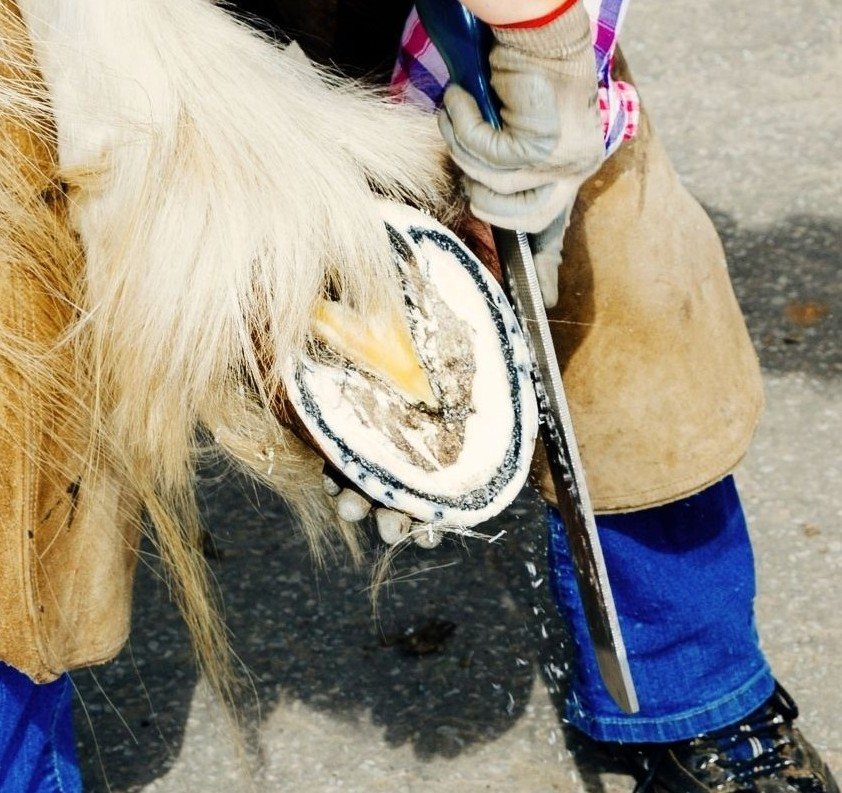
They may also remove loose or detached horn, allowing trapped dirt and debris to escape and making it easier to monitor the affected area. While this can make the cavity look larger at first, exposing damaged horn often supports better long-term healing.
Depending on the severity, your veterinarian or hoof care professional may recommend topical treatments to help keep the area clean. Because bacteria and fungi are secondary invaders rather than the primary cause, these products work best alongside good hoof balance and appropriate management, not as stand-alone treatments.
Recovery takes time. Hoof wall grows from the coronary band downward, so damaged horn cannot be repaired. It must gradually be replaced by new, healthy growth. Regular trims every four to six weeks help maintain balance and allow progress to be monitored.
For horses with extensive wall loss or tenderness, temporary support may also improve comfort while the hoof grows out.
How to Help a Horse Recover from White Line Disease
Comfort plays an important role in recovery.
When horses are comfortable, they move more naturally. Appropriate movement supports circulation within the hoof, helps maintain joint mobility, and encourages healthy hoof function. Horses experiencing pain often move less, placing abnormal stresses on other limbs and slowing rehabilitation.
Providing clean footing, maintaining regular hoof care, and following your veterinarian’s recommendations all contribute to a smoother recovery.
Can Hoof Boots Help with White Line Disease?
When recommended by your veterinarian or hoof care professional, Cavallo Hoof Boots can provide additional comfort and protection during recovery.
Used with supportive pads, they can help cushion the hoof, reduce concussion on firm ground, and protect weakened hoof walls while healthy horn grows down. They may also make it easier for horses to remain comfortably active during rehabilitation and allow owners to continue turnout or controlled exercise where appropriate.
Because every horse and every case is different, hoof boots should be selected and fitted according to your horse’s individual needs and your veterinary or hoof care professional’s guidance.
Can White Line Disease Come Back?
Yes, but recurrence is often preventable.
If the underlying causes remain unchanged, the same mechanical stresses can create new areas of separation, allowing white line disease to return.
The best prevention combines:
- Regular, balanced hoof care
- Prompt attention to cracks and flares
- Good stable and pasture hygiene
- Appropriate nutrition
- Management of underlying conditions such as laminitis, EMS, or PPID when present
Once healthy hoof has completely grown in, maintaining these practices greatly reduces the likelihood of future problems.
Apple Cider Vinegar for White Line Disease
Many horse owners ask whether apple cider vinegar or other home remedies can treat white line disease.
While some products may help create a cleaner hoof environment, there is little scientific evidence that they resolve white line disease on their own. The success of treatment depends far more on correcting hoof mechanics, removing compromised horn where appropriate, and allowing healthy hoof wall to grow.
If you choose to use a home remedy, discuss it with your veterinarian or hoof care professional and view it as a supportive measure, not a replacement for appropriate hoof care.
When Should You Call a Veterinarian for White Line Disease?
Contact your veterinarian if your horse becomes lame, develops heat or a stronger digital pulse, or the separation appears deep, extensive, or close to the coronary band. Veterinary attention is also important if there is bleeding, swelling, drainage, a foul odour, or concern that infection has reached sensitive structures.
Radiographs may be recommended when the damage is extensive, the hoof wall has lost significant support, or laminitis or coffin bone changes are suspected. Your veterinarian can then work with your farrier or hoof care professional to develop a treatment and support plan suited to the severity of the case.
Even when your horse appears comfortable, recurring or rapidly spreading white line disease should be assessed. Repeated separation can sometimes point to unresolved hoof imbalance, previous laminitis, insulin dysregulation, EMS, PPID, or another underlying health issue.
Looking Ahead
White line disease can look alarming, especially when a small opening on the outside reveals a much larger cavity beneath the hoof wall. Fortunately, many horses recover well when the problem is recognized early, and the underlying cause is addressed.
The cavity itself is only part of the story. Often, the hoof is telling us something else needs attention, whether that is balance, trimming, nutrition, environment, comfort, or an underlying metabolic condition.
Over the years, we have learned that successful outcomes rarely come from one product or one quick fix. They come from thoughtful hoof care, good professional guidance, clean footing, regular monitoring, and the patience to let healthy hoof grow.
Hooves grow. They adapt. They continually replace themselves. When we slow down and listen to what the hoof is showing us, even a small separation can become an opportunity to improve comfort, movement, and long-term hoof health.
Healthy hooves are built one trim, one day, and one step at a time.
Ready to choose?
Find the Right Boot for Your Horse
When your veterinarian or hoof-care professional recommends them, hoof boots can add comfort and protection during recovery. Measure after a fresh trim, then choose the boot that suits your horse.
Sources
- Beasley, Brian, DVM. “White Line Disease in Horses.” Merck Veterinary Manual. Reviewed by Angel Abuelo, DVM, PhD, DABVP, DECBHM, FHEA, MRCVS. Updated June 2024. https://www.merckvetmanual.com/musculoskeletal-system/disorders-of-the-foot-in-horses/white-line-disease-in-horses
- British Horse Society. “White Line Disease in Horses (Seedy Toe).” Last reviewed April 10, 2026. https://www.bhs.org.uk/horse-care-and-welfare/health-care-management/hoof-care/white-line-disease-in-horses/
- Darani, Priska, PhD, PAS. “White Line Disease in Horses: Causes, Symptoms, Treatment and Recovery.” Mad Barn. Reviewed by Emily Gilbert, PhD, with veterinary review by Eleanor Kellon, VMD. Updated May 28, 2026. https://madbarn.ca/white-line-disease-in-horses/
- O’Grady, Stephen E., DVM, MRCVS, and Travis D. Burns, MS, CJF, TE, EE, FWCF. “White Line Disease: A Review (1998–2018).” Equine Veterinary Education, vol. 33, no. 2, 2021, pp. 102–112. https://doi.org/10.1111/eve.13201
- O’Grady, Stephen E., DVM, MRCVS. “A Fresh Look at White Line Disease.” Equine Veterinary Education, vol. 23, no. 10, 2011, pp. 517–522. https://doi.org/10.1111/j.2042-3292.2011.00301.x